Turning Pharma Manufacturing into a Journey of Precision and Performance
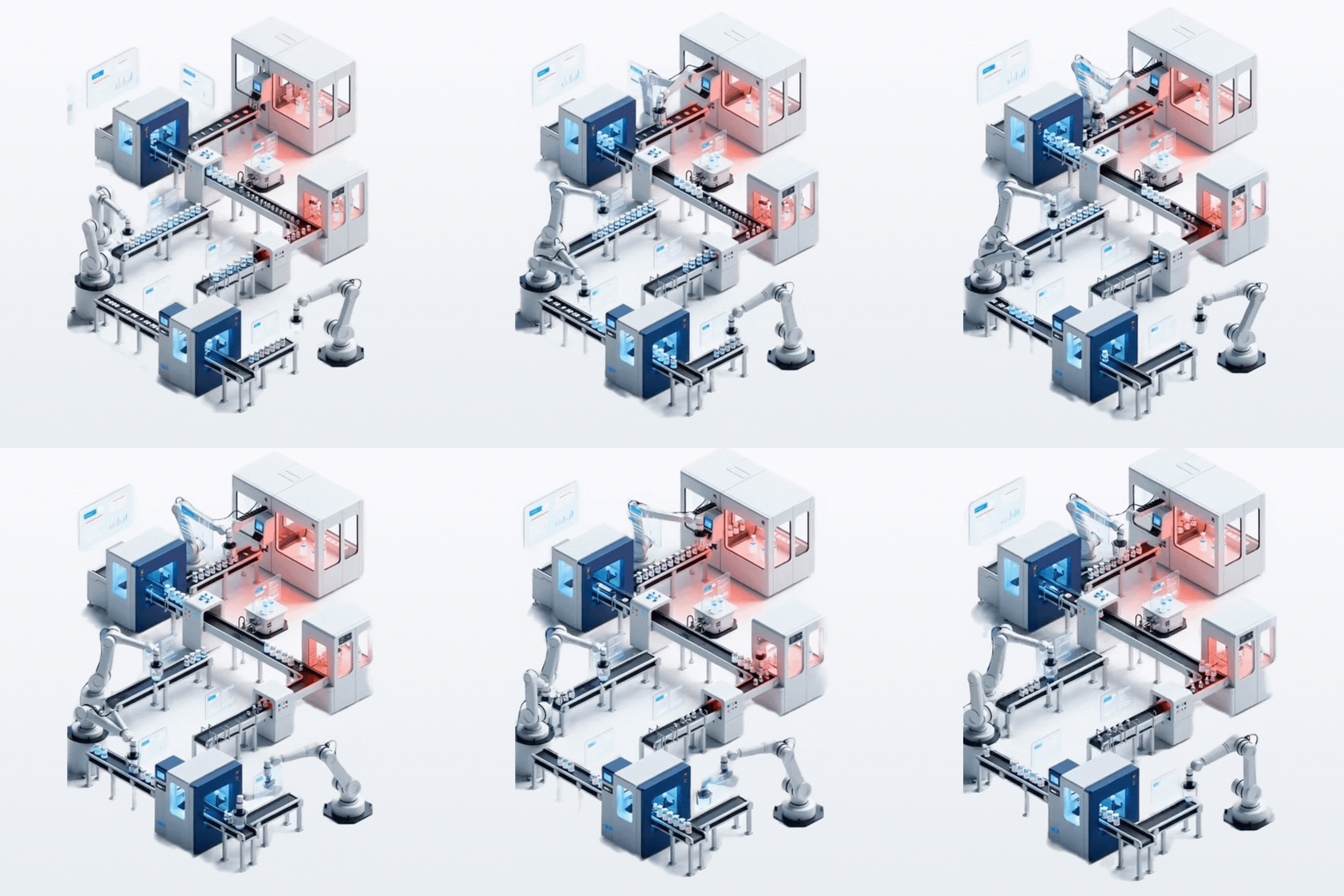

PharmaxMES is more than a Manufacturing Execution System—it’s the operational heartbeat of modern pharmaceutical production. Designed for the strict demands of pharma and life sciences, PharmaxMES turns factory floors into connected, intelligent environments where every decision is informed, every batch is traceable, and every process is compliant.
Instead of juggling paper-based processes, fragmented tools, or isolated equipment data, PharmaxMES unifies your entire manufacturing ecosystem into one real-time platform. From batch execution to equipment management, from electronic logbooks to automated quality checks, the system transforms complexity into clarity—empowering operators, supervisors, and quality teams to work in sync.
Key Features
Electronic Batch Records (EBR)
Digitized batch execution
Automated data capture
Real-time batch progress tracking
Material & Inventory Traceability
Lot-level traceability
Real-time material issuance
Expiration and status tracking
Equipment & Line Management
Equipment status monitoring
Maintenance & calibration alerts
Digital equipment logbooks
Integration with Existing Systems
ERP, LIMS, SCADA, PLC, and QMS integrations
Seamless data flow across the plant
Open APIs for rapid connectivity
SOP & Workflow Automation
Guided electronic work instructions
Controlled workflows with conditional logic
Reduction of manual errors
Quality & Compliance Automation
Integrated deviation management
Audit-ready electronic trails
21 CFR Part 11 & GxP compliant
DIGITAL TRANSFORMATION
Leverage your IT with our Operartional Technology (OT) convergence platform.
Benefits
Real-Time Production Visibility
Track batch progress live
Monitor equipment status instantly
View production metrics in one dashboard
Identify delays as they happen
Improve decision-making with real-time data
Consistent Product Quality
Standardize production steps with digital SOPs
Enforce in-process checks and quality gates
Detect deviations early in the process
Reduce batch variability
Improve overall batch yield
End-to-End Material Traceability
Track materials from receipt to finished goods
Capture lot, expiry, and status changes
Prevent mix-ups and contamination
Support fast recall management
Reduced Manual Errors & Paperwork
Replace paper records with electronic workflows
Automate data capture from equipment
Prevent manual entry mistakes
Eliminate redundant documentation
Enhanced Compliance & Audit Readiness
Automatically record all actions and events
Maintain 21 CFR Part 11 & GxP-compliant records
Reduce documentation errors
Seamless Cross-System Integration
Connect with ERP, LIMS, QMS, SCADA/PLC
Ensure smooth data flow across departments
Eliminate data silos
Improve planning accuracy
Implementation Plan
- Stakeholder interviews and current-state assessment.
- Define planning scope: products, locations, channels, forecast horizon.
- Identify data sources and data owners.
- Document business processes and KPI targets.
- Sign off on solution blueprint and project plan.
- Extract and cleanse historical sales and master data.
- Configure hierarchies and attributes (SKU, location, customer).
- Set up integration with ERP/CRM/POS (APIs or batch).
- Define exception rules and data quality checks.
- Initial data load into staging and planning environment.
- Configure calendars, planning hierarchies, and user roles.
- Set up forecasting models, parameters, and override rules.
- Configure workflows for demand review and approvals.
- Define KPI dashboards and business rules for alerts.
- Run initial forecasting cycles and validate outputs with planners.
- Train key users (planners, sales, supply chain, finance).
- Execute pilot cycle on selected business unit / regions / product families.
- Capture feedback and fine-tune models, dashboards, and workflows.
- Validate forecast accuracy improvements and process fit.
- Gradual rollout to all regions / business units.
- Cut-over from spreadsheet-based planning to system-driven planning.
- Ongoing training sessions and helpdesk support.
- Continuous monitoring of KPIs and forecast accuracy.
- Activate advanced features (ML models, promotion analytics, external data).
- Regular model re-tuning and periodic process reviews.