
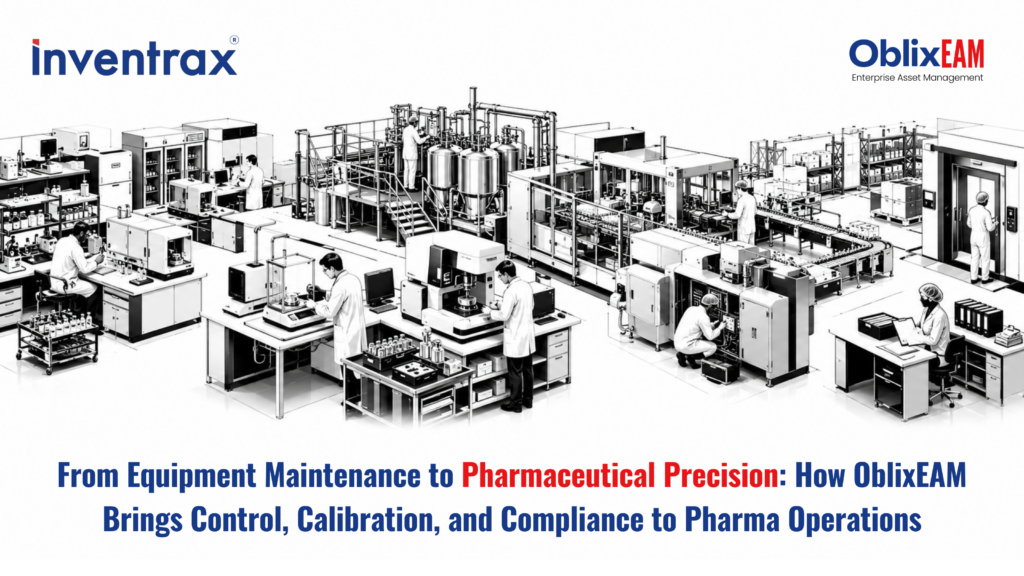
In industries such as material handling, construction, and equipment rental, effective equipment maintenance is essential for operational efficiency and minimizing downtime. But when it comes to the pharmaceutical industry, equipment maintenance takes on an entirely different level of importance.
In pharmaceutical manufacturing, equipment is not just a business asset. It can directly influence product quality, process consistency, laboratory accuracy, and compliance with strict industry standards.
From laboratory instruments and precision measuring devices to specialized manufacturing equipment, pharmaceutical organizations depend on equipment that must remain accurate, reliable, and properly maintained.
Unlike conventional industrial environments, many pharmaceutical facilities also operate with strict access controls, where only a limited number of authorized personnel can operate, maintain, inspect, or calibrate specific equipment.
This creates a critical challenge:
How do pharmaceutical companies ensure that every critical piece of equipment is properly maintained, accurately calibrated, accessible only to authorized personnel, and ready for use when required?
That’s where OblixEAM takes equipment management beyond traditional maintenance and into the world of pharmaceutical precision.
By extending its capabilities into the pharmaceutical sector, OblixEAM brings equipment maintenance, calibration management, controlled access, and maintenance traceability into a more connected operational environment.
The Challenge: Equipment Maintenance in the Pharmaceutical Industry
Pharmaceutical manufacturing and laboratory operations rely on equipment that must perform within defined operating parameters.
Even a small deviation in an instrument’s accuracy or performance can affect measurement reliability, manufacturing consistency, and the quality of operational decisions.
Consider equipment such as:
- Laboratory balances and precision weighing instruments
- Temperature and humidity monitoring devices
- Pressure gauges and measurement instruments
- Laboratory testing and analytical equipment
- Manufacturing and processing equipment
- Specialized instruments used in quality control
- Equipment requiring periodic calibration and preventive maintenance
Each asset may have different maintenance schedules, calibration intervals, operating requirements, and authorization restrictions.
Managing these requirements through spreadsheets, manual registers, disconnected calibration tools, and separate maintenance records can create significant operational challenges.
Common problems include:
- Calibration due dates being missed or overlooked.
- Equipment being used when its calibration status requires verification.
- Maintenance activities being recorded across disconnected systems.
- Limited visibility into the history of critical instruments.
- Unauthorized personnel accessing restricted equipment.
- Difficulty identifying the responsible technician or authorized user.
- Delays in locating calibration certificates and maintenance records.
- Challenges in demonstrating that maintenance and calibration activities were completed according to established procedures.
- Limited coordination between maintenance, laboratory, and quality teams.
As pharmaceutical operations grow, these challenges become increasingly difficult to manage.
The requirement is no longer simply to maintain equipment. It is to maintain accuracy, accountability, traceability, and controlled access throughout the equipment lifecycle.
The Solution: Bringing Pharmaceutical Equipment Management Into One Connected System
OblixEAM extends its equipment management capabilities into pharmaceutical operations, helping organizations establish a structured approach to managing critical equipment and its maintenance requirements.
Instead of treating equipment maintenance, calibration activities, and equipment access as disconnected responsibilities, organizations can work toward a more integrated asset management process.
The objective is to connect the essential stages of equipment management:
Asset Registration → Maintenance Planning → Calibration Management → Authorized Access → Maintenance Execution → Recordkeeping
This approach helps pharmaceutical organizations establish better visibility into the status and history of their equipment.
Maintenance teams can manage service requirements, responsible personnel can coordinate calibration activities, and authorized users can work within the organization’s defined operational controls.
The result is a more structured approach to maintaining equipment reliability while supporting the documentation and accountability expected in pharmaceutical environments.
Calibration Management: Keeping Critical Equipment Accurate

Calibration is one of the most important aspects of pharmaceutical equipment management.
Instruments used for measurement, monitoring, and testing must be maintained according to applicable procedures and calibration requirements.
When calibration activities are managed manually, tracking due dates, service history, certificates, and follow-up actions can become complicated—particularly when an organization manages a large number of instruments.
With calibration tools integrated into the equipment management workflow, OblixEAM can help connect calibration activities with the corresponding equipment records and maintenance processes.
Depending on the configured integration and organizational procedures, this can support:
- Calibration scheduling: Maintain visibility into planned calibration activities and upcoming due dates.
- Calibration history: Associate completed calibration activities with the relevant equipment records.
- Certificate and document traceability: Connect supporting calibration documentation with the appropriate asset or activity, where supported.
- Maintenance coordination: Link calibration requirements with equipment maintenance planning.
- Status visibility: Help responsible teams identify equipment requiring calibration review or follow-up.
- Record accessibility: Make relevant equipment and calibration information easier for authorized personnel to retrieve.
By bringing calibration information closer to equipment maintenance operations, organizations can reduce dependence on disconnected records and improve their ability to manage critical instruments.
The goal is simple: make calibration requirements visible, manageable, and traceable rather than relying entirely on manual follow-ups.
Controlled Equipment Access: Ensuring the Right People Have the Right Access

In pharmaceutical facilities, not every employee is permitted to access every piece of equipment.
Certain instruments may be restricted to trained technicians, laboratory personnel, quality teams, or other specifically authorized individuals.
These restrictions may be necessary because of equipment complexity, operating procedures, safety considerations, or internal quality requirements.
This makes access control an important part of the overall equipment management process.
A structured equipment management approach can help organizations identify:
- Which equipment requires restricted access.
- Which personnel are authorized to operate or service specific assets.
- Who is responsible for maintenance or calibration activities.
- Which personnel are assigned to a particular task.
- Whether the required authorization or training checks need to be verified before work begins.
OblixEAM can support the management of equipment responsibilities and maintenance assignments in line with configured roles and organizational workflows.
Where integrations with access-control or authorization systems are implemented, these controls can be connected to the relevant operational process.
This helps organizations establish clearer responsibility for critical equipment and reduces reliance on informal communication about who is permitted to access or service an asset.
The objective is not just to know where equipment is located, but also to establish who is responsible for it and who is authorized to work with it.
Equipment Maintenance: Beyond Traditional Asset Tracking
Pharmaceutical equipment requires more than reactive maintenance.
Organizations need a structured way to plan inspections, schedule preventive maintenance, assign technicians, document completed work, and maintain a history of equipment-related activities.
When these activities are handled separately, maintenance teams may struggle to obtain a complete picture of an asset’s condition and service history.
OblixEAM connects equipment information with maintenance workflows, helping teams organize maintenance activities around the assets they manage.
This can include:
- Equipment registration and identification.
- Preventive maintenance planning.
- Maintenance task assignment.
- Work Order creation and tracking.
- Recording maintenance activities and observations.
- Tracking spare-part requirements associated with maintenance.
- Maintaining equipment service history.
- Monitoring pending and completed maintenance tasks.
By connecting these activities, organizations can improve visibility into equipment condition and maintenance responsibilities.
For example, if a laboratory instrument requires periodic servicing, the maintenance team can use the equipment’s records and maintenance workflow to organize the required work and maintain a record of the activity.
This creates a more consistent approach to equipment upkeep and supports better coordination between technical teams and equipment users.
Complete Equipment Traceability: Connecting Every Activity to the Asset

In pharmaceutical environments, maintaining equipment is only one part of the process. Organizations also need reliable records of what was done, when it was done, and who was responsible.
When maintenance records, calibration reports, service documents, and equipment information are stored separately, retrieving a complete history can take valuable time.
A connected asset management approach helps bring these records together.
For each applicable asset, organizations can build a more comprehensive record of its lifecycle, including:
- Equipment identification and specifications.
- Maintenance schedules and completed Work Orders.
- Calibration activities and associated records.
- Service history and maintenance observations.
- Responsible personnel and task assignments.
- Supporting documents and certificates, where configured.
- Equipment status and pending activities.
This creates a stronger foundation for equipment traceability.
Instead of searching multiple registers to understand an instrument’s history, authorized personnel can use the available equipment records to review its maintenance and calibration information.
A typical equipment lifecycle may follow this sequence:
Equipment Registration → Maintenance Planning → Calibration Scheduling → Authorized Assignment → Activity Completion → Record Update → Review and Follow-Up
The precise workflow depends on the organization’s procedures and the integrations configured within its environment.
The benefit is a clearer relationship between equipment, maintenance activities, calibration requirements, and supporting records.
Supporting Compliance Through Structured Maintenance Records
Pharmaceutical companies operate under quality systems and regulatory requirements that may govern equipment qualification, calibration, maintenance, documentation, and access.
Meeting these requirements involves more than performing maintenance on time. Organizations must also follow approved procedures, retain appropriate records, and demonstrate that required activities have been completed.
OblixEAM can support these operational needs by helping teams organize equipment-related activities and maintain traceable maintenance records.
A structured process can help teams:
- Identify upcoming maintenance and calibration requirements.
- Track assigned and completed activities.
- Associate records with the relevant equipment.
- Maintain visibility into outstanding tasks.
- Retrieve supporting documentation where available.
- Establish clearer responsibility for maintenance activities.
- Review equipment history when investigating operational issues.
However, software alone does not establish regulatory compliance. Compliance depends on the organization’s processes, configuration, validation, documentation practices, and applicable regulatory requirements.
When implemented appropriately, equipment management workflows can become an important part of the organization’s broader quality and compliance framework.
The objective is to make equipment-related information easier to manage, review, and substantiate—not to replace the quality procedures that govern pharmaceutical operations.
From Conventional Equipment Management to Pharmaceutical Precision
Before a Connected Equipment Management Approach
- Maintenance and calibration records may be maintained in separate systems.
- Calibration due dates may depend on manual tracking.
- Equipment access responsibilities may be difficult to verify.
- Maintenance assignments may require repeated follow-ups.
- Service history may be spread across multiple records.
- Retrieving supporting documentation may take time.
- Maintenance and laboratory teams may have limited shared visibility.
With OblixEAM and Connected Calibration Workflows
- Equipment information can be organized within a structured asset management process.
- Maintenance activities can be planned and tracked.
- Calibration requirements can be connected to equipment records through configured workflows and integrations.
- Equipment responsibilities can be managed according to organizational roles.
- Work Orders can connect maintenance activities to specific assets.
- Supporting records can be associated with the relevant equipment where configured.
- Authorized personnel can gain better visibility into equipment status and service history.
The transformation is not simply from manual records to digital records.
It is from fragmented equipment management toward a connected, traceable, and more controlled approach to pharmaceutical asset operations.
The Results: What This Means for Pharmaceutical Organizations
1. Better Calibration Visibility
Structured calibration planning and connected records help responsible teams monitor scheduled activities and identify requirements that need attention.
Result: Improved visibility into calibration status and upcoming activities.
2. Greater Equipment Accountability
Clearer assignment of maintenance responsibilities helps organizations identify who is responsible for particular equipment and tasks.
Result: Better coordination and responsibility across technical teams.
3. Improved Maintenance Planning
Organized maintenance schedules and Work Orders help teams coordinate servicing and follow-up activities.
Result: A more structured approach to equipment reliability and maintenance execution.
4. Stronger Traceability
Connecting equipment with maintenance activities and associated calibration records helps create a more complete operational history.
Result: Easier retrieval of equipment-related information and better support for internal reviews.
5. Better Control Over Restricted Equipment
Role-based workflows and appropriately configured authorization integrations can help organizations manage equipment responsibilities and access requirements.
Result: Clearer oversight of who is permitted to perform specific equipment-related activities.
6. Improved Operational Visibility
Connected equipment records can help maintenance, laboratory, and management teams review relevant asset information.
Result: Better-informed decisions about maintenance priorities and equipment requirements.
7. A Foundation for Scalable Operations
A structured equipment management approach can help organizations manage growing numbers of assets, maintenance activities, and associated records.
Result: A more organized framework for managing equipment throughout its lifecycle.
Connecting Equipment Maintenance, Calibration, and Pharmaceutical Operations
The real value of extending OblixEAM into the pharmaceutical sector lies in connecting activities that are often managed separately.
Consider a precision instrument used in a pharmaceutical laboratory.
The instrument is registered in the asset management system.
Its maintenance requirements are defined according to the organization’s procedures.
A calibration activity is scheduled through the configured calibration workflow.
The appropriate personnel are assigned to carry out the required activity.
The work is performed and the relevant records are updated.
Authorized stakeholders can then review the available equipment status, maintenance history, and calibration documentation.
If an issue is identified, the organization can follow its established procedures to assess the equipment and determine the appropriate next steps before it is returned to use.
This connected approach helps bring maintenance and calibration information into a more organized operational framework.
It also supports better collaboration between maintenance personnel, laboratory teams, equipment owners, and quality stakeholders.
Because in pharmaceutical operations, equipment management is not an isolated maintenance function. It is part of the larger process of maintaining reliable, controlled, and well-documented operations
Why Choose OblixEAM for Pharmaceutical Equipment Management?
With its expansion beyond material handling equipment and conventional industrial assets, OblixEAM is extending its equipment management capabilities into an environment where precision, documentation, and controlled processes are particularly important.
OblixEAM can help pharmaceutical organizations work toward:
- Structured equipment lifecycle management.
- Organized maintenance scheduling and Work Order tracking.
- Better visibility into calibration requirements through configured integrations.
- Improved equipment service-history traceability.
- Clearer maintenance responsibilities.
- Better coordination between equipment and maintenance records.
- Easier access to relevant equipment information for authorized personnel.
- More organized maintenance documentation.
- Improved visibility into pending and completed activities.
- A scalable approach to managing critical equipment.
Whether an organization manages laboratory instruments, precision measurement devices, or specialized pharmaceutical manufacturing equipment, effective asset management requires more than simply maintaining a list of equipment.
It requires a structured process for understanding the asset, planning its maintenance, managing its calibration requirements, assigning responsibility, and preserving the records associated with its lifecycle.
OblixEAM brings its equipment management foundation into the pharmaceutical environment, helping organizations move toward a more connected approach to maintenance, calibration, and asset accountability.
Ready to Bring Greater Control to Pharmaceutical Equipment Management?
As pharmaceutical operations become more sophisticated, managing critical equipment through disconnected tools and manual records can create unnecessary complexity.
Maintenance teams need visibility into service requirements. Laboratory personnel need access to relevant equipment information. Calibration activities need to be planned and documented. Management needs a clearer understanding of equipment status and outstanding responsibilities.
With OblixEAM, pharmaceutical organizations can work toward connecting these activities through a structured equipment management approach, supported by maintenance workflows and calibration integrations appropriate to their operational requirements.
From tracking critical equipment to coordinating maintenance and calibration activities, OblixEAM helps bring greater organization, traceability, and visibility to the equipment lifecycle.
Manage critical equipment. Connect calibration and maintenance. Strengthen operational control.
OblixEAM — evolving equipment management for industries where precision matters.