
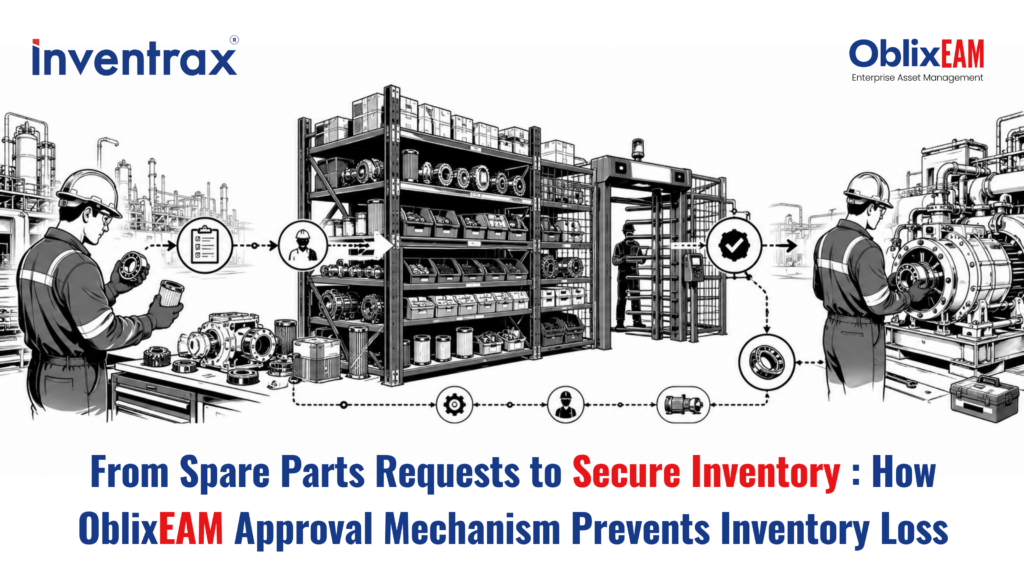
In equipment maintenance and rental operations, spare parts are essential for keeping machines running and minimizing downtime. But managing spare parts is not just about knowing what is available in inventory—it is also about controlling who can request, approve, issue, and use those parts.
Without a structured approval process, spare parts can easily be issued without proper authorization, requested in excess, or become difficult to track once they leave the store.
This creates a common challenge for organizations managing large inventories:
How do you make sure every spare part issued from inventory is properly authorized and accounted for?
That’s where the oblixEAM Approval Mechanism helps.
The Challenge: Controlling Spare Parts Before They Leave Inventory
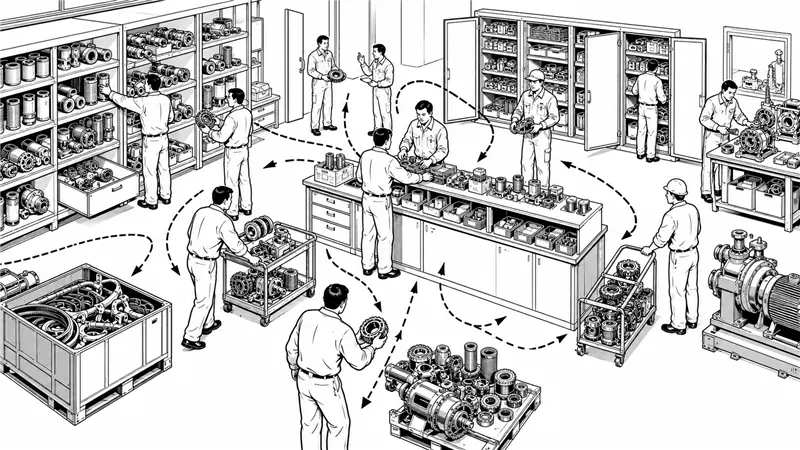
Many organizations still depend on manual processes to manage spare-part requests.
A technician may identify a requirement, contact the storekeeper, and request a spare part. In some cases, the part may be issued immediately without a formal approval workflow.
As the number of service jobs and technicians increases, this creates several risks:
- Spare parts can be issued without proper authorization.
- Inventory quantities may decrease without sufficient accountability.
- Parts may be requested unnecessarily or in excess.
- Store teams have limited visibility into who approved a request.
- It becomes difficult to track the reason for issuing a spare.
- Misplaced or unaccounted spare parts can impact inventory accuracy.
- Managers have limited control over spare-part consumption.
The result is not only inventory discrepancies but also increased operational costs.
For businesses managing thousands of spare parts, inventory control needs to begin before the part is issued—not after.
The Solution: A Controlled Spare Parts Approval Mechanism
oblixEAM introduces an approval mechanism that adds a structured authorization layer between spare-part requests and inventory issue.
Instead of allowing every requested spare part to move directly out of inventory, the system ensures that the request follows the defined approval process.
This creates a clear chain of accountability:
Request → Review → Approval → Issue → Consumption
Every stage is controlled and recorded within the system.
Approval Before Inventory Movement
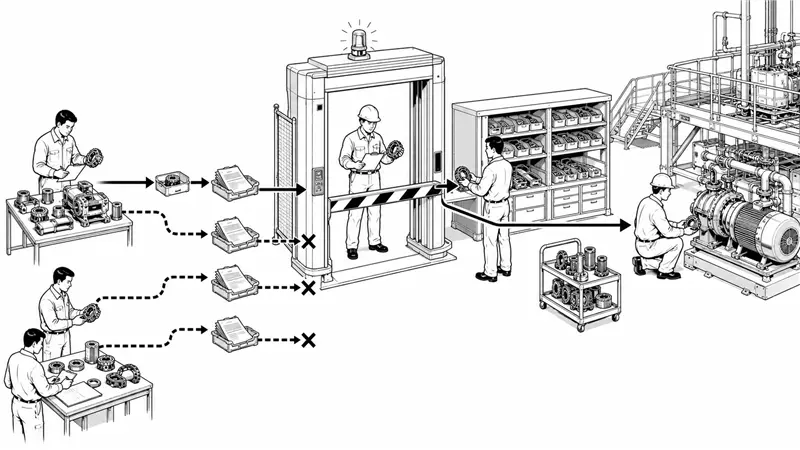
When a technician identifies a requirement for a spare part during a Job Order, the technician can raise a spare-part request.
The requested part does not simply disappear from inventory.
Instead, the request enters the appropriate approval workflow.
The designated approver can review:
- Job Order details
- Customer and equipment information
- Requested spare part
- Required quantity
- Reason for the request
- Technician requesting the part
- Previous requests where applicable
Only after the request is approved can the spare part proceed through the defined issue process.
This ensures that inventory movement is backed by an authorized business decision.
Role-Based Approval
Different organizations have different levels of control.
Some may require a service manager to approve spare requests, while others may require additional authorization depending on the quantity, value, or type of spare.
oblixEAM can support a structured approval hierarchy based on the organization’s operational requirements.
This means :
Technician requests → Authorized person reviews → Store issues
The technician can focus on identifying the required part, while the appropriate authority controls whether that part should be released.
Protecting Spare Parts from Misplacement
One of the biggest advantages of an approval mechanism is improved accountability.
Without approval controls, a spare part may be physically removed from the store while the system has limited information about why it was issued.
With a controlled workflow, every movement can be associated with a specific request and Job Order.
This provides visibility into:
- Who requested the spare
- What spare was requested
- How much was requested
- Who approved it
- When it was approved
- When it was issued
- Which Job Order it belongs to
- Where the spare was intended to be used
This creates a digital trail for every important inventory movement.
Instead of asking:
“Where did this spare part go?”
the organization can determine:
“Who requested it, who approved it, which job it belongs to, and when it was issued.”
Complete Spare-Part Traceability
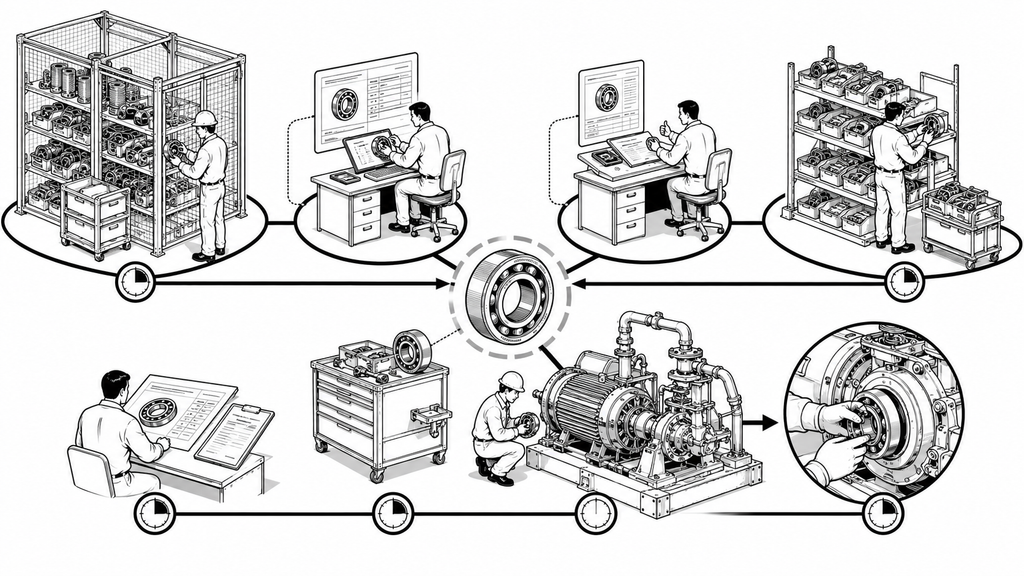
Inventory accuracy depends on traceability.
oblixEAM connects spare-part requests with the associated maintenance activity, creating a more transparent relationship between inventory and service operations.
For example:
Job Order → Spare Request → Approval → Inventory Issue → Spare Consumption
This allows management to understand not only what left the inventory but also why it left the inventory.
It becomes significantly easier to investigate discrepancies, review consumption patterns, and maintain accurate stock records.
Preventing Unauthorized Inventory Issues
An approval mechanism also acts as a control point.
If a spare-part request has not received the required authorization, the process can prevent the inventory issue from proceeding.
This helps organizations reduce the risk of:
- Unauthorized spare issues
- Duplicate requests
- Excessive spare consumption
- Unnecessary inventory movements
- Untracked spare-part usage
The inventory team no longer needs to rely entirely on verbal instructions or informal communication.
The system becomes the source of truth.
Better Control for Managers
For service and inventory managers, approval workflows provide greater visibility into spare-part consumption.
Managers can identify:
- Frequently requested spare parts
- High-consumption equipment
- Repeated requests
- Unusual quantities
- Spare usage by technician or Job Order
- Inventory movements requiring attention
This information can help organizations improve purchasing decisions, identify abnormal consumption, and optimize spare inventory levels.
From Uncontrolled Requests to Accountable Inventory Management
Before oblixEAM Approval Mechanism
- Technicians request parts manually.
- Approval may happen through calls or messages.
- Storekeepers have limited authorization visibility.
- Spare parts can be issued without a structured workflow.
- Tracking the reason for inventory movement is difficult.
- Investigating discrepancies takes time.
After oblixEAM Approval Mechanism
- Spare requests are raised digitally.
- Requests follow a defined approval process.
- Authorized personnel control spare issuance.
- Every request is linked to the relevant Job Order.
- Inventory movements become traceable.
- Managers gain better visibility and control.
- Spare-part accountability improves.
The Results
Stronger Inventory Security
Approval controls ensure spare parts are not simply issued without authorization.
Result: Reduced risk of unauthorized or unexplained inventory movements.
Improved Accountability
Every request can be associated with the person who requested and approved it.
Result: Clear responsibility throughout the spare-part lifecycle.
Better Inventory Accuracy
Controlled inventory movements make it easier to understand where and why stock was issued.
Result: More reliable inventory records.
Reduced Spare-Part Misplacement
By connecting requests, approvals, Job Orders, and inventory movements, organizations can reduce the possibility of parts becoming unaccounted for.
Result: Better control over valuable spare inventory.
Greater Operational Visibility
Managers gain visibility into spare consumption across technicians, equipment, customers, and Job Orders.
Result: Better decisions and improved cost control.
Connecting Service Operations With Inventory Control
The real value of an approval mechanism is that it does not operate in isolation.
It connects the service process with inventory management.
A technician working on a machine identifies a requirement.
The technician raises a spare request.
The request is reviewed and approved.
The store issues the approved quantity.
The spare is associated with the relevant Job Order.
The organization can then track the movement and usage of that spare.
This creates a controlled ecosystem where service activity and inventory movement remain connected.
Why Choose oblixEAM for Spare Parts Control?
The oblixEAM approval mechanism helps organizations:
- Control spare-part requests
- Prevent unauthorized inventory issues
- Establish clear approval workflows
- Improve spare-part traceability
- Connect inventory movements with Job Orders
- Reduce the risk of misplaced parts
- Improve inventory accuracy
- Increase accountability
- Gain better visibility into spare consumption
- Strengthen overall inventory governance
Whether you manage a small service operation or thousands of assets across multiple branches, having control over spare parts is essential.
Because inventory security isn’t just about counting what is in the store.
It is about knowing why every part leaves the store, who authorized it, where it went, and what happened to it.
Ready to Take Control of Your Spare Inventory?
If your organization still relies on verbal approvals, spreadsheets, manual registers, or informal communication for spare-part requests, inventory control can quickly become difficult as operations grow.
With the oblixEAM Approval Mechanism, organizations can introduce a structured, transparent, and accountable process for managing spare parts.
From the moment a technician requests a part to the moment it is issued and consumed, oblixEAM helps keep every movement connected, authorized, and traceable.
Secure your inventory. Control every request. Track every movement.
oblixEAM — turning spare-part management into a controlled and accountable process.