
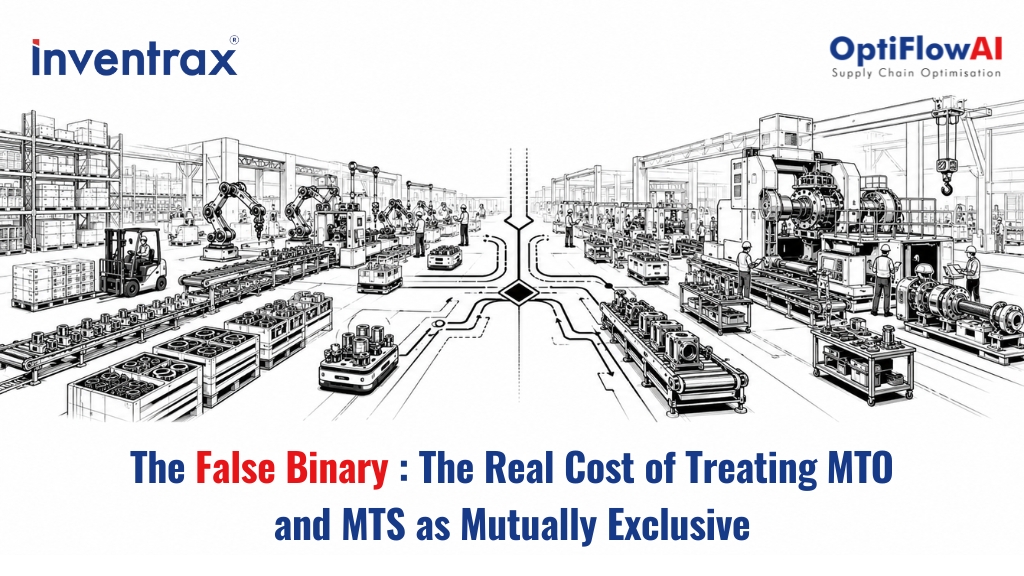
Ask most manufacturing companies whether they run make-to-order or make-to-stock, and they’ll give you a confident, single answer. In reality, almost none of them are telling the whole truth.
A capital goods manufacturer builds custom equipment against firm customer orders, classic make-to-order. But the standard fasteners and brackets that go into every unit get built to stock, because waiting for a customer order to trigger procurement on a bolt would be absurd. A single plant, two fundamentally different planning logics running underneath it, whether the organization has formally acknowledged that or not.
Most MRP systems were never built to acknowledge it either. They assume a plant, sometimes an entire company, picks one strategy and applies it uniformly. That assumption is the false binary, and it’s quietly costing manufacturers money, service level, and planning sanity every day.
WHY THE BINARY DOESN’T MATCH REALITY
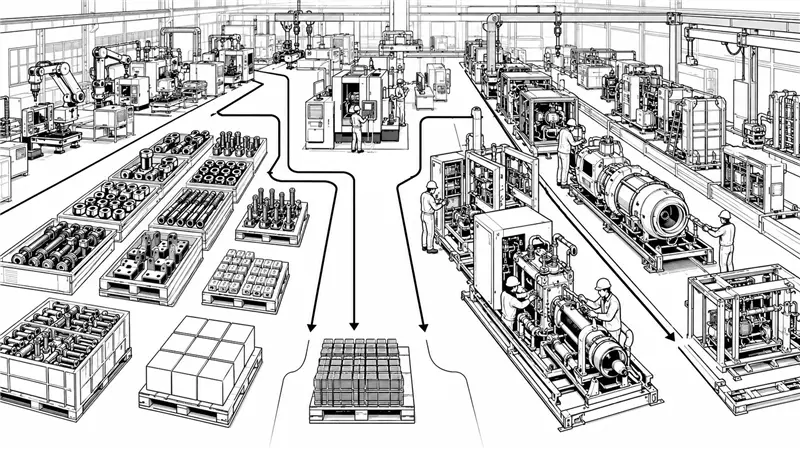
The traditional framing treats MTO and MTS as opposite ends of a single spectrum, pulled by customer orders or pushed by forecasts. As Siemens’ Opcenter puts it, MTO planning starts with order fulfillment and works backward through the production sequence, while MTS planning starts with supply and works forward toward finished inventory.
That framing was built for narrow product lines and simple bills of materials. Modern manufacturing rarely fits either pole cleanly. Research on hybrid production strategy confirms this: the decision of which strategy applies isn’t made once at the company level, it’s made repeatedly, at the item level, sometimes at the customer level. The real question was never “MTO or MTS?” It was always “which items, for which customers, under which conditions?” Most planning systems never built the infrastructure to answer that with precision.
THE COST OF FORCING ONE ANSWER
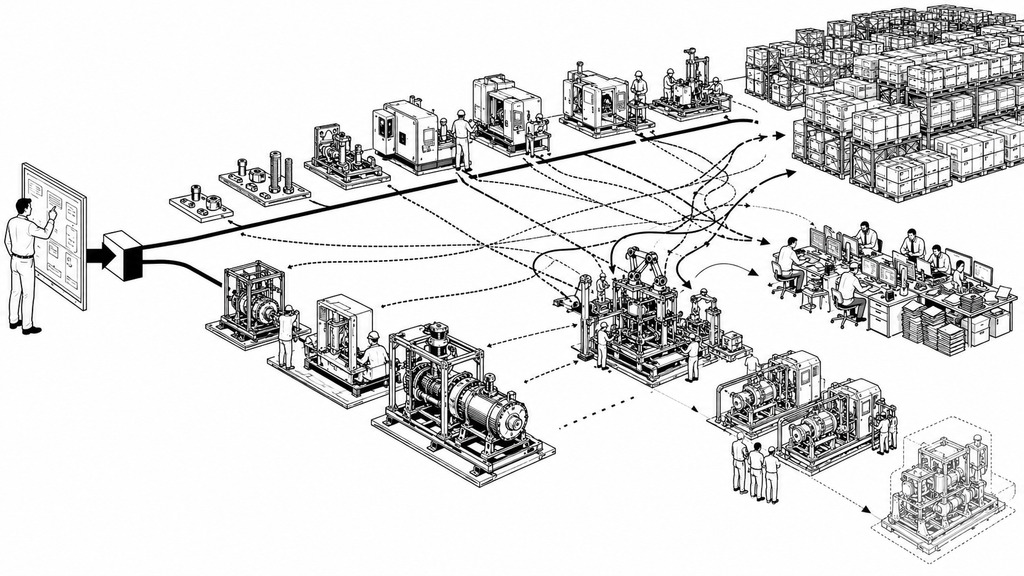
When a system forces a single strategy across a mixed environment, the damage compounds rather than staying isolated. Items that should be built to stock get treated as MTO, and customers wait weeks for parts that could have shipped from a shelf. Items that should be built to order get treated as MTS, and the warehouse carries inventory for customized configurations that may never sell exactly that way twice. Planners maintain manual workarounds, spreadsheets tracking which SKUs are “really” MTO, tribal knowledge living in one planner’s head instead of the system itself.
A dedicated planning approach for hybrid production has been shown to deliver savings of up to 65 percent compared to policies that don’t distinguish properly between MTO and MTS states within the same operation. That’s the structural cost of pretending a mixed environment is a single one.
THE DECOUPLING POINT NOBODY’S PLACED CORRECTLY
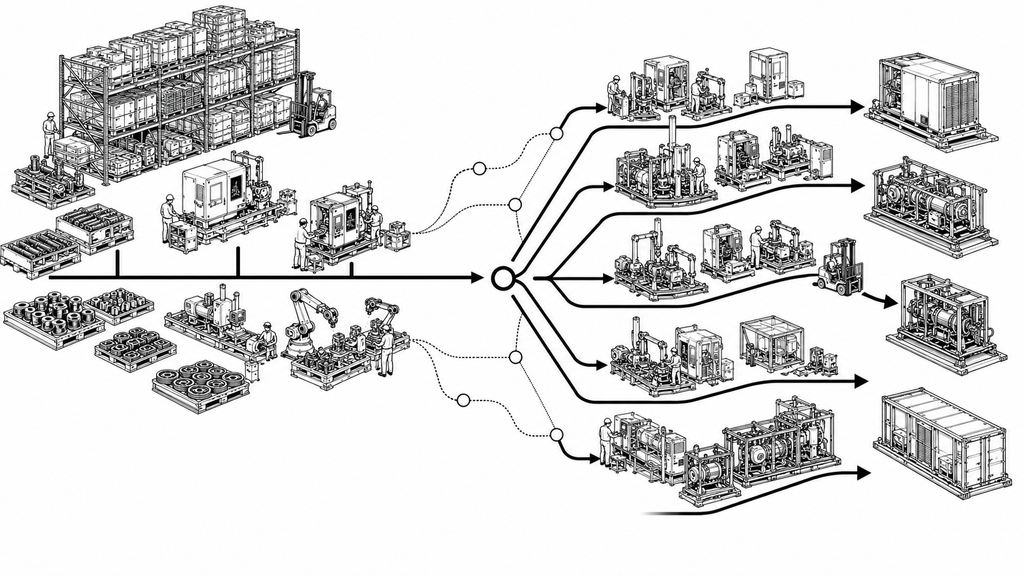
Academic literature on hybrid production has a specific concept for where MTO logic should end and MTS logic should begin: the decoupling point, the position where a product shifts from being built against forecast to being built against firm demand. Research shows market conditions, product characteristics, and production constraints all influence where that point should sit, and some models propose moving it dynamically based on real-time order patterns rather than locking it in once.
Most legacy MRP systems treat the decoupling point as an afterthought, buried in item master flags that get set once, rarely audited, and rarely aligned to what’s actually happening in demand patterns years later.
WHAT ACTUALLY NEEDS TO EXIST
Solving this means classification at the item-plant level, not the company level, since the same SKU might run MTS in one plant and MTO in another. It means parallel netting logic, MRP calculating requirements differently depending on which strategy governs a given item, rather than one universal formula with manual exceptions. And it means the classification gets revisited, not set once and forgotten.
The industry’s own research points toward a three-way promising framework worth building around, available-to-promise for MTS items, capable-to-promise for MTO items, and profitable-to-promise layered across both, since committing to an order isn’t just about whether inventory exists, but whether fulfilling it makes financial sense given current constraints.
HOW OPTIFLOWAI HANDLES THIS DIFFERENTLY
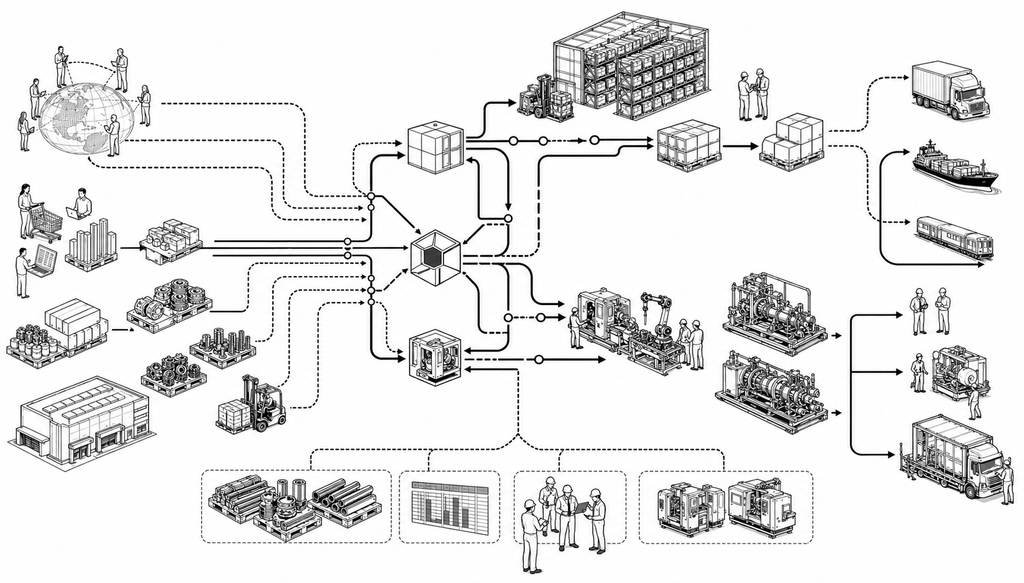
Most planning platforms, including several major enterprise systems, still treat MTO versus MTS as a global configuration decision made once and rarely revisited. OptiFlowAI doesn’t. It treats the distinction as a property that lives at the item-plant level, because that’s where the real decision actually operates, and it builds the entire netting and promising logic around that reality instead of working around it.
Classification Where the Decision Actually Belongs
Every item carries its own planning strategy designation at the plant level, not inherited from a blanket company policy.
- The same SKU can run MTS logic in one plant and MTO logic in another, reflecting genuinely different local demand and capacity realities
- Most systems skip this layer entirely, defaulting to one strategy and treating every exception as a manual override
Parallel Netting, Not One Formula With Exceptions
MRP requirement calculations run through separate logic streams depending on which strategy governs a given item.
- MTS items net against forecast and safety stock
- MTO items net against confirmed demand and customer commitments
- Neither stream distorts the other, and neither strategy has to be manually patched on top of assumptions built for the opposite model
Available, Capable, and Profitable to Promise, Resolved Together
This is where OptiFlowAI goes further than most platforms in the market. Committing to a customer order isn’t just a question of whether inventory exists, it’s whether inventory exists, whether capacity is genuinely free, and whether fulfilling the order actually makes financial sense given current constraints. OptiFlowAI resolves all three checks, availability, capability, and profitability, as part of the same order commitment decision, rather than treating ATP as the only question that matters and leaving capacity and margin as afterthoughts handled outside the system.
A Decoupling Point That Moves With the Business
Because strategy lives as a configurable, item-plant-level attribute rather than a hardcoded assumption buried in legacy logic, reclassifying an item as demand patterns shift doesn’t require a system overhaul or a re-implementation project. The decoupling point moves when the business genuinely needs it to move, not stay frozen at whatever made sense three years ago during initial setup.
Manufacturing has never been a clean binary between building to stock and building to order. Most plants have always run both, quietly, through workarounds and manual overrides that compensate for planning systems that never acknowledged the mix existed. The industry’s own research confirms what a dedicated hybrid approach is worth, savings of up to 65 percent compared to systems that force a single strategy. OptiFlowAI is built on the premise that the mix is the reality, and the planning logic should reflect that from day one, not patch around it after the fact.