
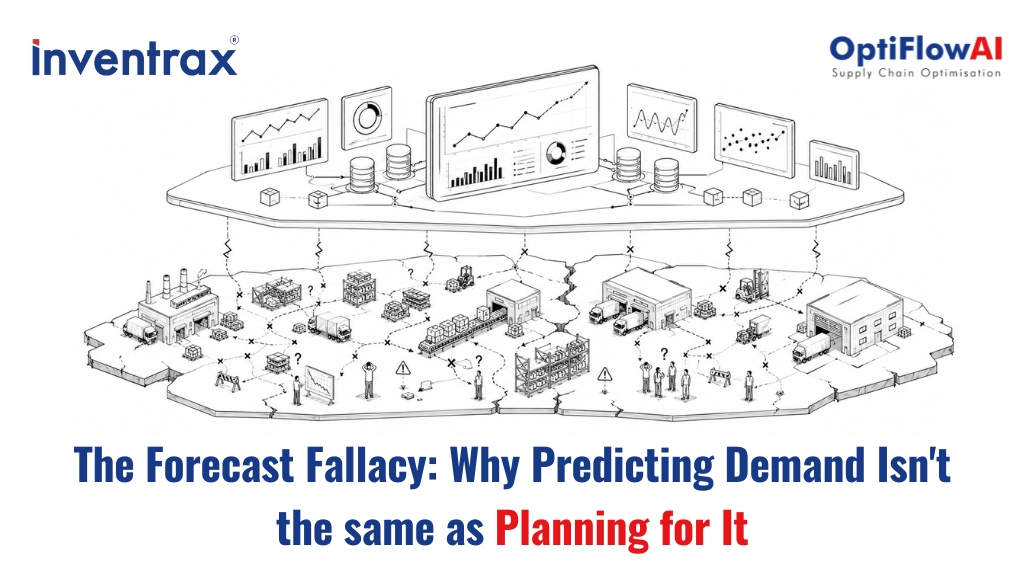
The forecast said 12,000 units. The warehouse built 12,000 units. And the business still missed its service targets, burned through safety stock on the wrong SKUs, and scrambled to expedite orders that should have been routine. The forecast was right. Everything after it was wrong.
But here’s the problem nobody talks about: the forecast can be right and the business can still fail operationally.
An 86% forecast accuracy looks great on the dashboard. But if that forecast isn’t shaped by market intelligence, adjusted for promotions and product launches, stress-tested against capacity constraints, and translated into a cross-functional business response — it’s just a number. A good number. But still just a number.
This is the forecast fallacy — the widespread belief that producing an accurate demand prediction is the same as having a demand plan. It isn’t. And the gap between the two is where excess inventory, stockouts, nervous MRP signals, and firefighting are born.
Forecasting Produces a “Number”; Planning Produces a “Decision.”
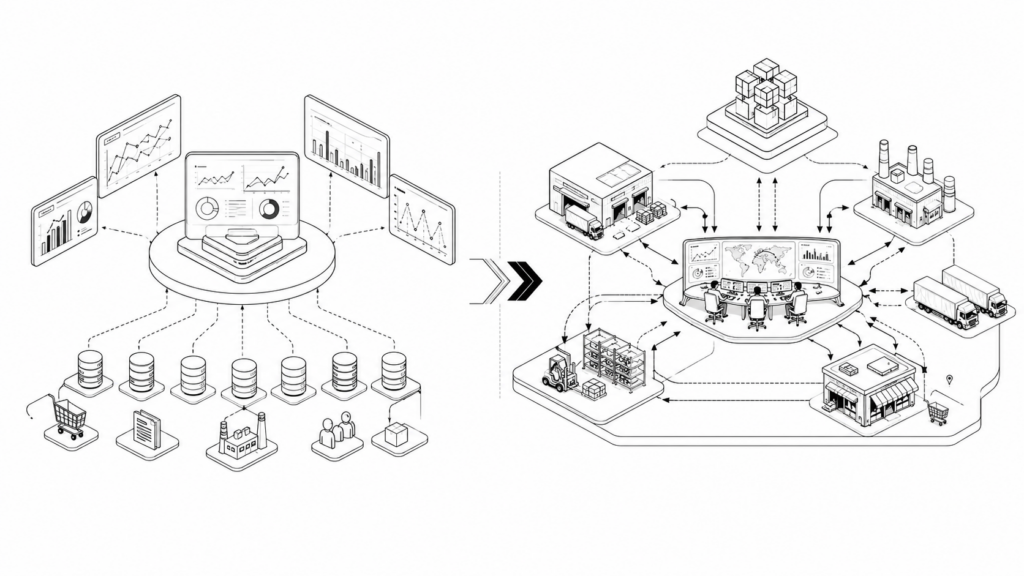
The distinction is simple but the consequences are massive.
Demand forecasting asks: “What is likely to happen?”
-
- It focuses on historical data, trends, seasonality, and statistical models
-
- It produces a system-generated prediction — a baseline number
-
- It’s typically owned by planning systems, demand analysts, or forecasting teams
-
- Its output is a number
Demand planning asks: “What should we do about it?”
-
- It layers in market intelligence, sales insights, customer projects, and business strategy
-
- It accounts for promotions, new launches, supply constraints, and capacity decisions
-
- It’s owned by cross-functional leadership — S&OP teams, supply chain planners, sales and operations
-
- Its output is an executable business plan
A forecast tells you demand for Product A next quarter is 12,000 units. A demand plan tells you whether to build to that number, where to position inventory, which supplier to commit to, what capacity trade-offs to accept, and what happens to service levels if the forecast is off by 15%.
As Supply Chain Management Review noted recently, forecasting isn’t broken — it’s overused. The real issue is applying forecasting where it doesn’t add value, especially when internal behaviors distort demand signals. Leading organizations are now shifting from purely forecast-driven planning to models that align supply more closely with actual demand and business context.
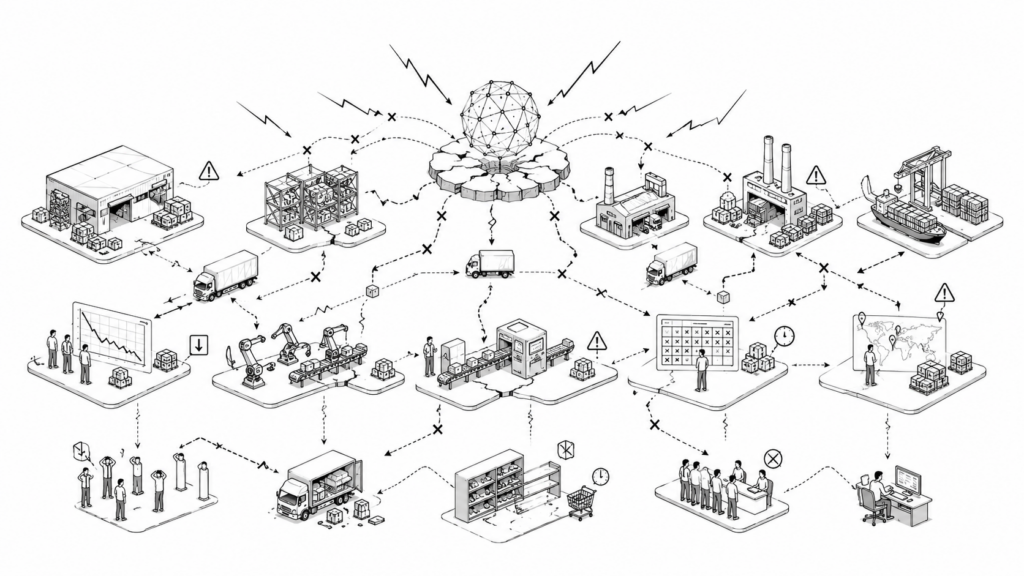
When companies treat the forecast as the finish line rather than the starting point, a predictable pattern of failures emerges:
-
- High inventory but low availability — the aggregate forecast looks fine but the mix is wrong, leaving warehouses full of the wrong SKUs
-
- Nervous MRP signals — every small forecast adjustment cascades through the system, triggering unnecessary purchase order changes and supplier confusion
-
- Frequent production reschedules — without a demand plan that accounts for capacity and constraints, the production schedule becomes a moving target
-
- KPI manipulation — teams start gaming forecast accuracy metrics to look good on paper while actual service levels and OTIF performance tell a different story
-
- ERP planning instability — the system recalculates based on raw forecast changes without the business context that would filter noise from real signals
The Netstock 2025 Benchmark Report — studying 2,400 SMBs managing $26 billion in inventory — found a widening performance gap between organizations using established forecasting methods and those that have adapted to true demand planning. The difference isn’t about better algorithms. It’s about wrapping business intelligence around the forecast before it enters the planning cycle.
Mature organizations don’t replace forecasting. They build on it. The statistical forecast becomes the foundation — not the final answer. On top of it, they layer:
-
- Business intelligence — sales pipeline data, market trends, competitive moves, customer-level insights that no algorithm can capture alone
-
- Capacity and supply constraints — can we actually build what the forecast suggests, and if not, what are the trade-offs?
-
- Cross-functional alignment — demand, supply, finance, and commercial teams working from the same assumptions, not parallel spreadsheets
-
- Scenario depth — multiple demand versions tested against supply realities before a single plan is committed
That combination — statistical forecast plus business intelligence plus constraints plus alignment — is what separates organizations that “predict demand” from organizations that “manage demand.” And as the IBF’s research consistently highlights, demand planning acts as the foundation for synchronized operations — it’s what allows marketing, sales, supply chain, finance, and production to operate from a common set of assumptions.
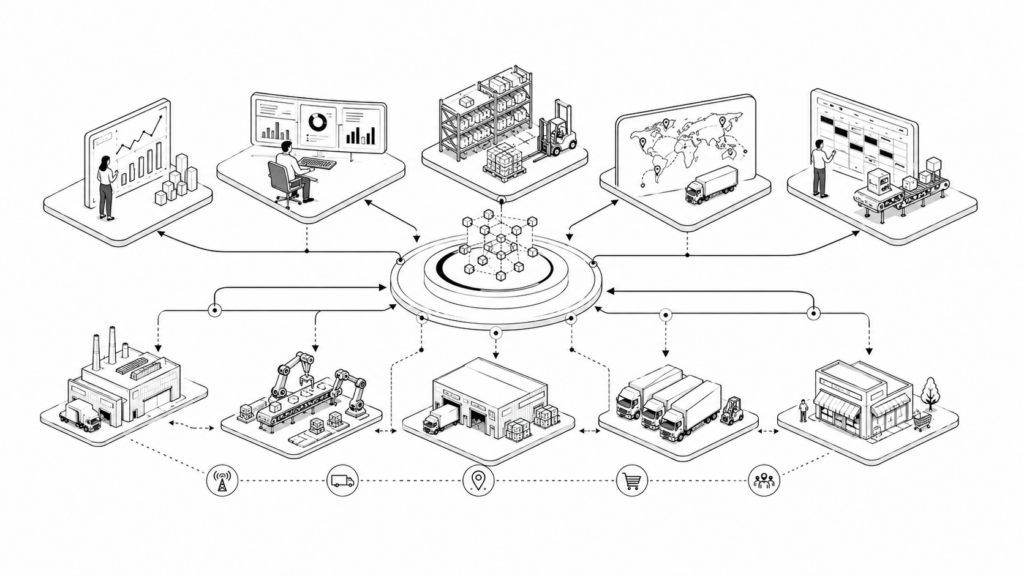
OptiFlowAI is built on the principle that forecasting is the beginning of demand planning, not the end of it.
-
- Two-tier demand architecture. OptiFlowAI maintains the statistical baseline forecast as Tier 2 — the algorithmic starting point. On top of it, the Consolidated Demand Plan (CDP) serves as Tier 1 — the business-adjusted, cross-functionally reviewed, scenario-tested demand plan that actually drives supply decisions. The forecast informs. The CDP decides.
-
- Business context built in. Promotions, new product introductions, customer-specific commitments, and known market shifts are captured directly in the demand plan — not lost in a sidebar conversation during the S&OP meeting.
-
- Constraint-aware demand planning. OptiFlowAI doesn’t let a demand plan get finalized without surfacing what it means for capacity, materials, and inventory. The plan isn’t just “what we want to sell” — it’s “what we can realistically deliver.”
-
- From plan to execution. The demand plan in OptiFlowAI flows directly into supply planning, production scheduling, and demand release — no handoff gaps, no copy-paste into a separate system, no version-control chaos.
A forecast can be correct and still fail operationally. A demand plan built on that forecast — shaped by business intelligence, tested against constraints, and connected to execution — is what makes S&OP actually work.
Forecasting predicts the future. Demand planning prepares the business for it. OptiFlowAI makes sure both happen — and that the connection between them never breaks.
Contact Inventrax
 Phone: +91 812 103 5323; +91 868 831 9940
 Email: sales@inventrax.com
 Website: www.inventrax.com