
1. AI-Powered Warehouse Operations
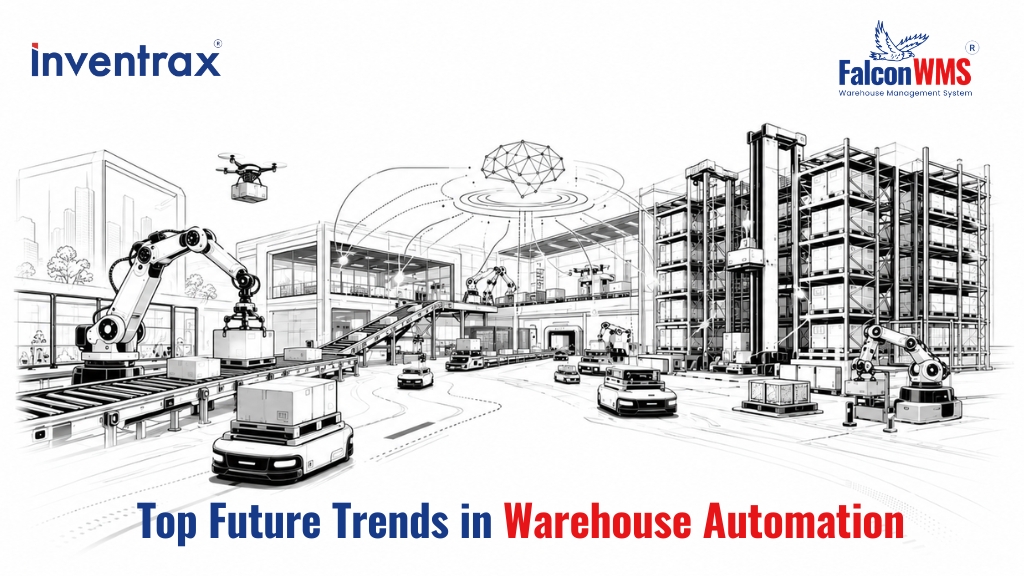
Artificial Intelligence (AI) is becoming the brain behind warehouse automation.
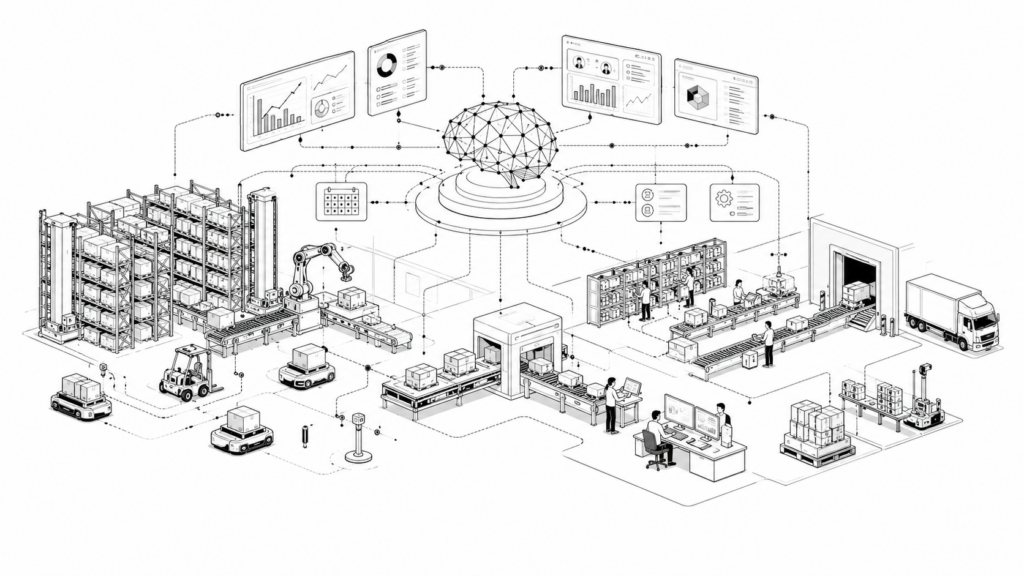
AI will help warehouses:
-
- Predict inventory demand
-
- Optimize picking routes
-
- Improve labor scheduling
-
- Detect operational bottlenecks
-
- Automate decision-making
AI-driven analytics can process massive amounts of warehouse data in real time, enabling smarter and faster operations.
2. Autonomous Mobile Robots (AMRs)
Autonomous Mobile Robots are replacing traditional manual material handling.
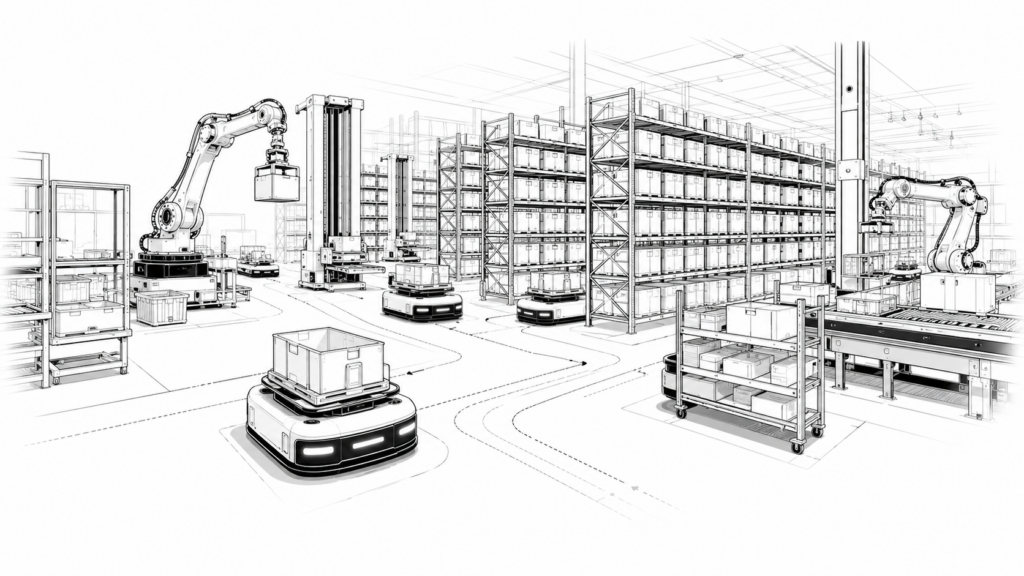
Unlike fixed conveyor systems, AMRs can:
-
- Navigate independently
-
- Avoid obstacles
-
- Adapt to changing warehouse layouts
-
- Transport goods efficiently
Future impact:
-
- Reduced labor dependency
-
- Faster order fulfillment
-
- Improved warehouse flexibility
AMRs are expected to become standard in large fulfillment centers.
3. Robotic Picking Systems
Advanced robotic arms with computer vision are improving picking accuracy and speed.
Future robotic systems will:
-
- Handle fragile items more effectively
-
- Identify products using AI vision systems
-
- Operate continuously with minimal downtime
This technology is especially valuable for eCommerce warehouses with high SKU volumes.
4. Internet of Things (IoT) Integration
IoT devices will create highly connected smart warehouses.
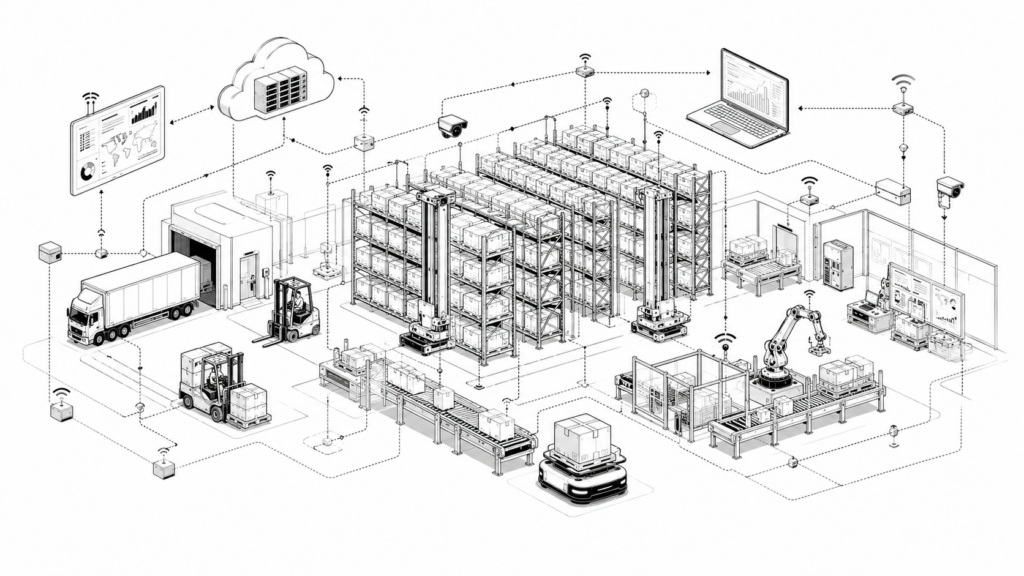
Examples include:
-
- Smart shelves
-
- Connected forklifts
-
- Temperature sensors
-
- Real-time asset tracking
-
- Predictive maintenance systems
IoT enables warehouses to monitor operations instantly and reduce equipment failures.
5. Digital Twins for Warehouse Simulation
Digital twin technology creates virtual replicas of warehouse operations.
Businesses can use digital twins to:
-
- Simulate workflows
-
- Test layout changes
-
- Predict operational issues
-
- Optimize warehouse performance
This allows companies to improve efficiency before making physical changes.
6. Predictive Analytics and Forecasting
Future warehouses will rely heavily on predictive analytics to anticipate:
-
- Inventory demand
-
- Seasonal trends
-
- Equipment maintenance
-
- Labor requirements
Using historical and real-time data, predictive systems will help reduce waste and improve planning accuracy.
7. Automated Storage and Retrieval Systems (AS/RS)
AS/RS technology is becoming more advanced and space-efficient.
These systems automatically:
-
- Store products
-
- Retrieve inventory
-
- Reduce travel time
-
- Improve storage density
Future AS/RS systems will integrate AI and robotics for even greater efficiency.
8. Voice and Wearable Technology
Warehouse workers will increasingly use:
-
- Voice picking systems
-
- Smart glasses
-
- Wearable scanners
-
- Augmented reality devices
Benefits:
-
- Hands-free operations
-
- Faster picking accuracy
-
- Reduced training time
-
- Improved worker productivity
Wearables also help improve worker safety and communication.
9. Drone-Based Inventory Management
Warehouse drones are emerging as a powerful tool for inventory audits.
Future drones will:
-
- Scan barcodes automatically
-
- Perform cycle counts
-
- Monitor high storage racks
-
- Reduce manual inventory checks
This improves inventory accuracy while reducing labor costs.
10. Sustainable Warehouse Automation
Sustainability is becoming a major priority in warehouse operations.
Future automation systems will focus on:
-
- Energy-efficient robotics
-
- Smart lighting systems
-
- Reduced packaging waste
-
- Electric warehouse vehicles
-
- Optimized transportation routes
Green warehousing will become both an environmental and business advantage.
Benefits of Future Warehouse Automation
Increased Efficiency
Automation reduces delays and improves operational speed.
Higher Accuracy
Robotic systems minimize human errors in picking and inventory management.
Reduced Labor Costs
Automated systems handle repetitive tasks more efficiently.
Better Scalability
Smart warehouses can adapt quickly to changing order volumes.
Improved Customer Satisfaction
Faster and more accurate fulfillment improves customer experience.
Challenges Businesses May Face
Despite its advantages, warehouse automation also presents challenges:
-
- High implementation costs
-
- Complex system integration
-
- Cybersecurity risks
-
- Workforce training requirements
-
- Technology maintenance
Companies must balance automation investments with operational goals.
The Human Role in Future Warehouses
Automation will not completely replace human workers. Instead, warehouse roles will evolve toward:
-
- System management
-
- Robotics supervision
-
- Data analysis
-
- Technical maintenance
-
- Strategic planning
Human workers and intelligent machines will increasingly collaborate in hybrid warehouse environments.
The Future of Smart Warehouses
The warehouse of the future will be:
-
- Highly automated
-
- AI-driven
-
- Data-centric
-
- Connected in real time
-
- Flexible and scalable
Businesses that adopt automation early will gain a significant competitive advantage in speed, cost efficiency, and operational resilience.