
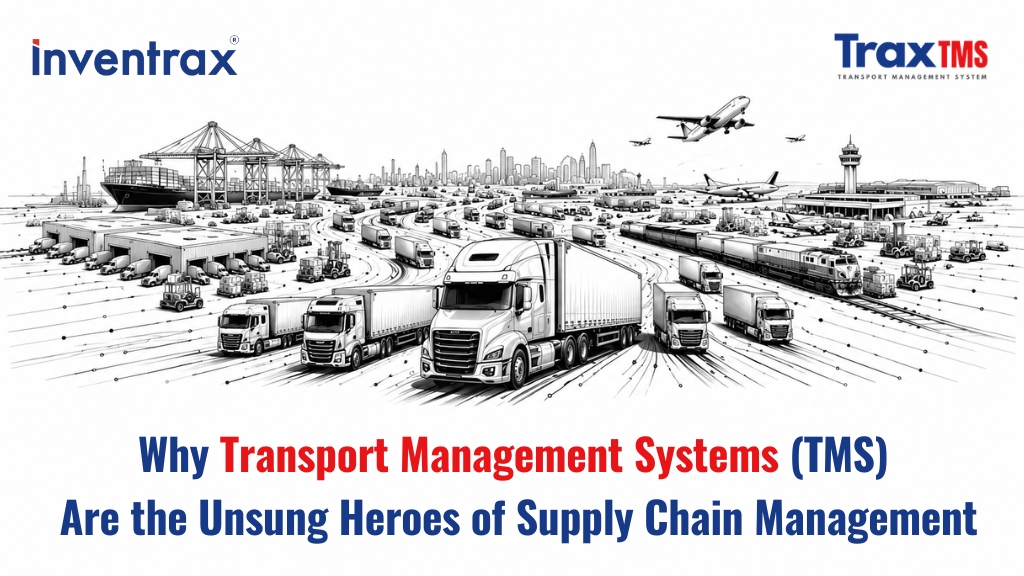
Every product on a shelf has traveled through multiple trucks, ports, warehouses, and distribution centers before reaching the customer. A Transportation Management System (TMS) is the software that makes that journey efficient, visible, and cost-effective.
What is a TMS?
A Transportation Management System (TMS) is a platform that plans, executes, and optimizes freight movement across road, rail, air, and ocean. It connects your ERP, WMS, and carriers, acting as the logistics control tower for your supply chain.
Here’s what a TMS does:
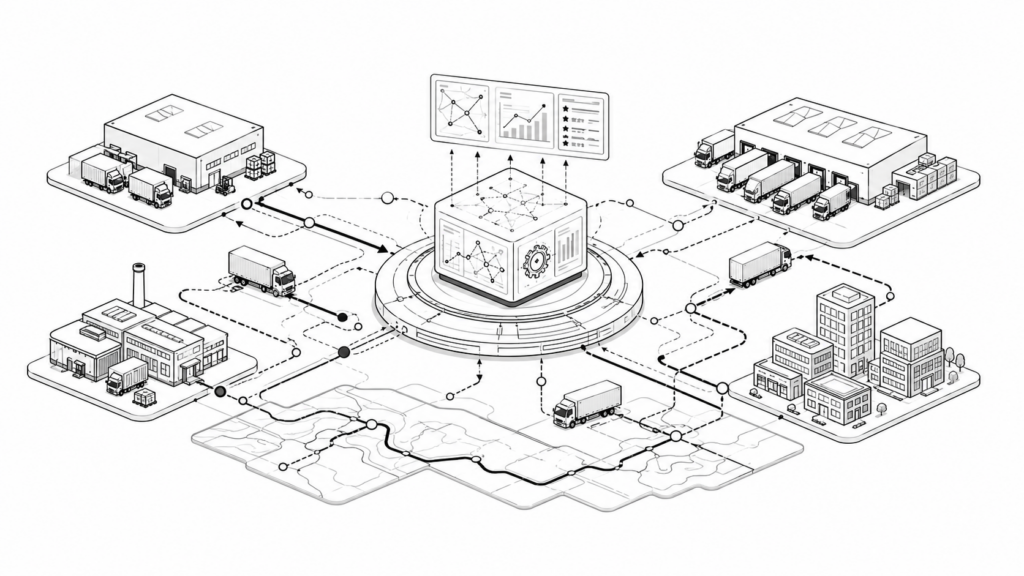
Route & Carrier Optimization
Evaluates multiple route and carrier combinations based on cost, transit time, and delivery windows, then automatically recommends the most efficient option.
Carrier Management
Compares carrier rates, capacity, and performance while automating shipment tendering to the best-fit carrier.
Freight Rate & Audit Management
Applies negotiated freight rates, validates invoices against contracts, and identifies billing errors before they become unnecessary costs.
Load Planning & Consolidation
Combines smaller shipments into fuller truckloads, reducing transportation costs while improving vehicle utilization and lowering emissions.
Real-Time Shipment Visibility
Provides live tracking through GPS and carrier integrations, along with proactive alerts for delays or disruptions.
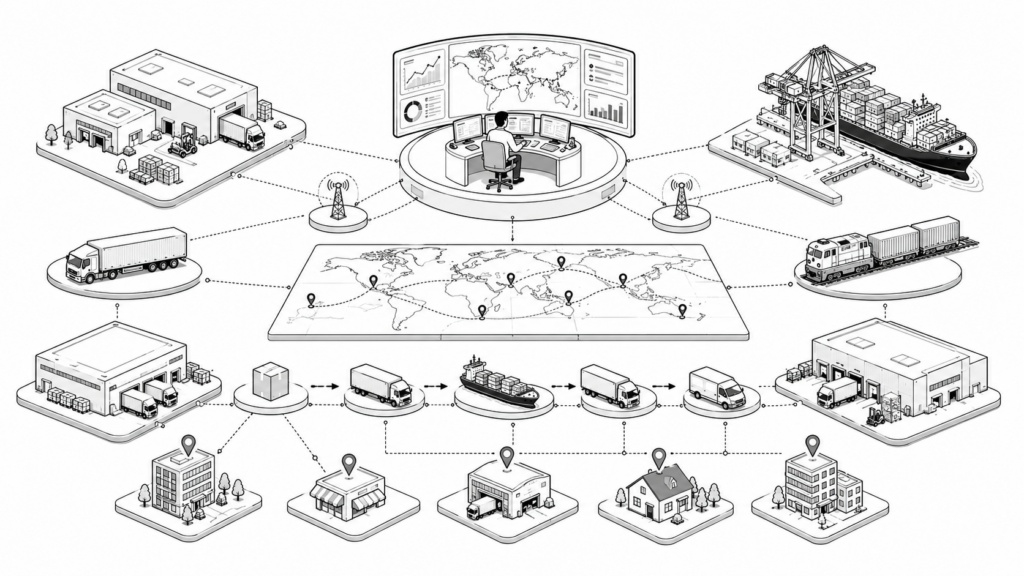
Analytics & KPIs
Tracks critical metrics such as on-time delivery, freight cost per mile, carrier performance, and overall transportation efficiency through centralized dashboards.
Why TMS Matters
Transportation is one of the largest controllable costs in any supply chain. Organizations that successfully implement a TMS often achieve:
 Lower freight costs through optimized routing and shipment consolidation. Higher on-time delivery performance and improved customer satisfaction. Fewer “Where is my shipment?” inquiries thanks to real-time visibility. The ability to scale shipping operations without increasing headcount proportionally.
Deployment Options
Cloud-Based (SaaS) – Fast implementation, lower maintenance, and easy scalability. The most popular deployment model today.
On-Premise – Greater control and customization, but requires higher IT investment and ongoing maintenance.
Managed Transportation (3PL) – Transportation operations are outsourced to a third-party logistics provider using its own TMS platform.
The Future of TMS
Artificial Intelligence and predictive analytics are transforming TMS platforms from reactive systems into proactive decision-making tools. Modern solutions can anticipate capacity shortages, weather disruptions, port congestion, and pricing fluctuations before they impact operations.
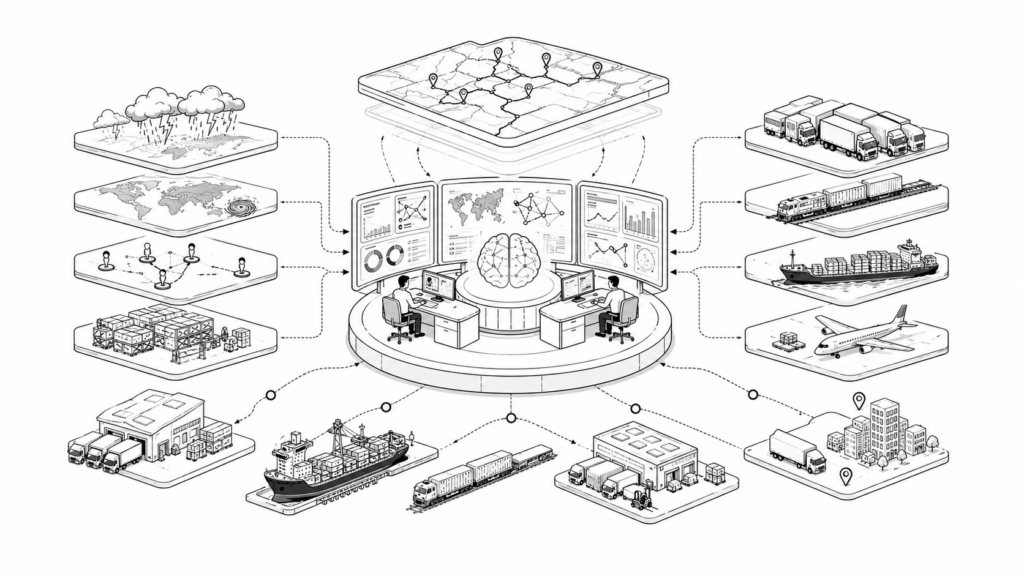
 A TMS Delivers Maximum Value When Integrated With:
• ERP systems for order management and financial data.
• WMS platforms for inventory, picking, and shipping coordination.
• EDI/API networks for automated communication with carriers.
• Customer and supplier portals for complete shipment visibility.
Organizations that treat TMS as an isolated application often miss significant operational and financial benefits.
 Common Implementation Challenges
• Poor master data quality.
• User adoption and change management.
• Complex ERP/WMS integrations.
• Carrier onboarding and EDI/API compliance.
 How to Choose the Right TMS
• Supports your transportation modes (Truckload, LTL, Parcel, Ocean, Rail).
• Integrates seamlessly with your existing ERP and WMS.
• Offers a strong carrier network and connectivity.
• Scales during peak seasons.
• Delivers the lowest total cost of ownership, including implementation, training, and ongoing support.
If your transportation operations still rely on spreadsheets, emails, and phone calls, implementing a Transportation Management System (TMS) can be one of the highest-impact investments you make in your supply chain.
What’s been your experience with TMS platforms—game changer or growing pain? Share your thoughts below! 